




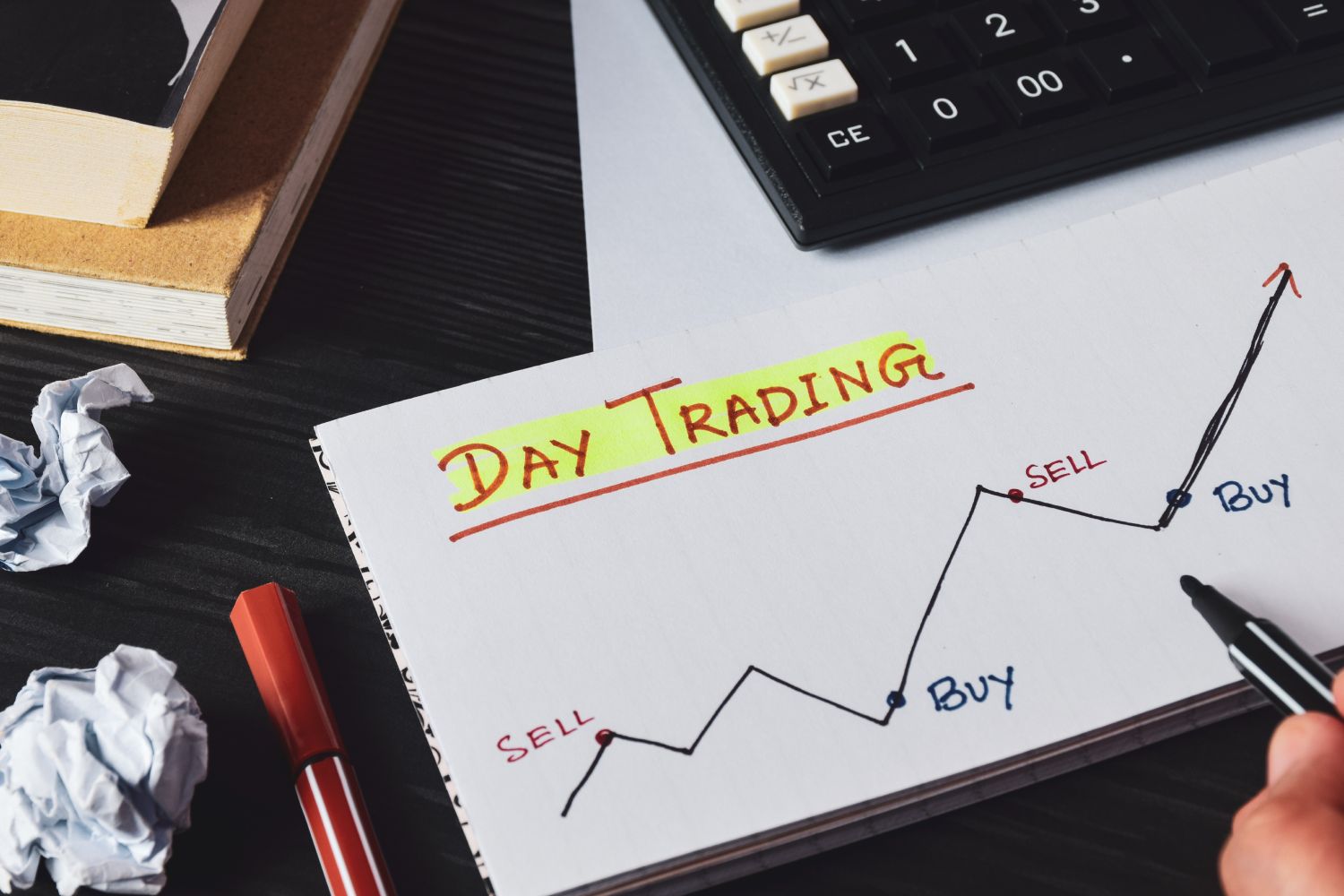
TL;DR
-
Learning day trading requires structured education, hands-on practice, and community support.
-
A day trading course, simulator, and trading community are the three most effective starting points.
-
There are no shortcuts, but there is a clear path — and consistency is what separates those who improve from those who quit.
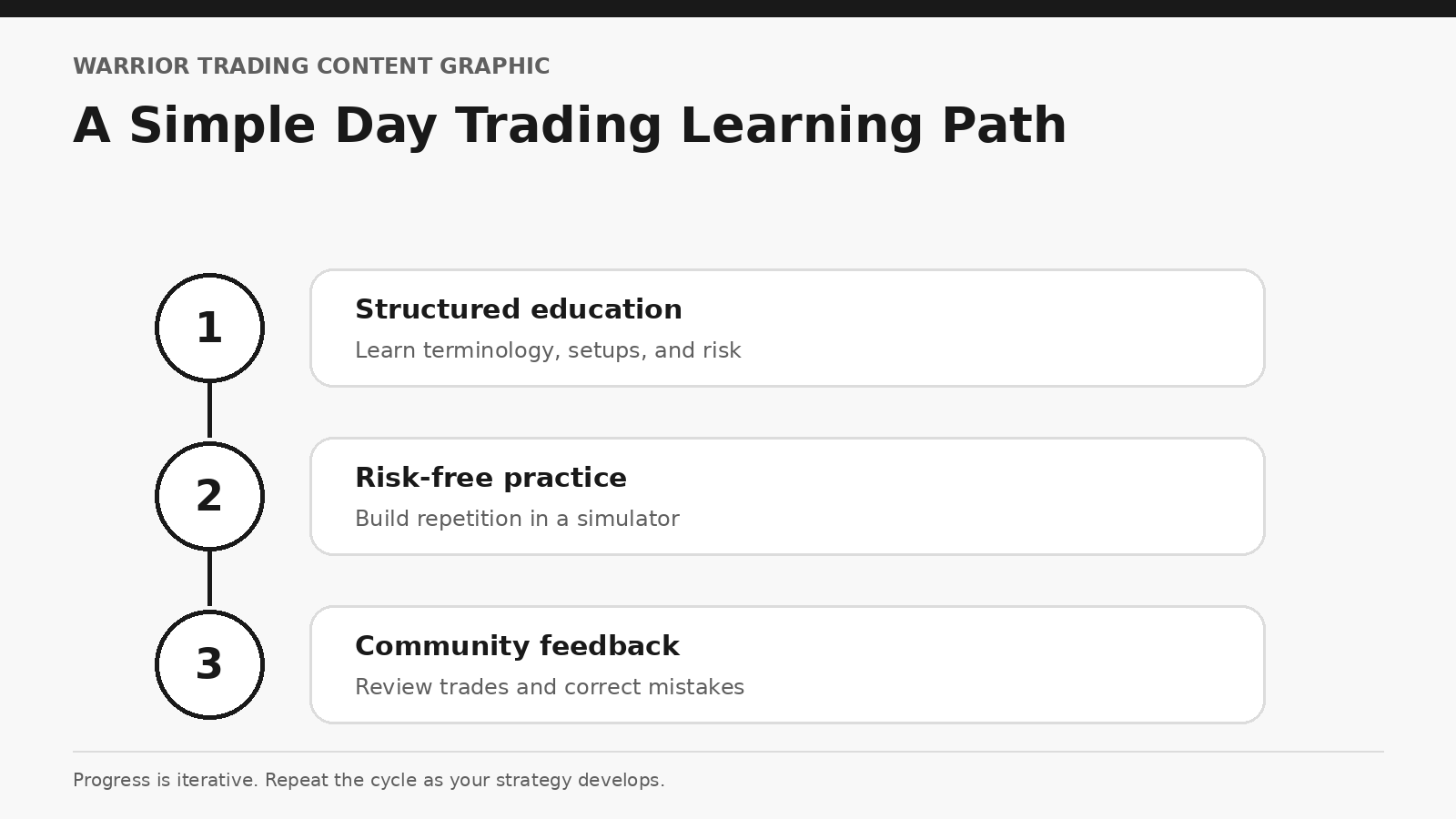
The best way to learn day trading is through a combination of structured education, risk-free practice, and learning alongside others. A day trading course gives you a guided foundation in chart patterns, entries, exits, and risk management — all in one place, taught by someone with proven experience.
While YouTube videos and blogs can introduce the basics, they tend to skip the nuance that actually matters when real money is on the line.
From there, a day trading simulator lets you apply what you’ve learned using real market data without financial risk. The key is to treat simulator trades seriously — work with the same amount of capital and trading style you plan to use in the real world, so the habits you build actually transfer.
Finally, joining a day trading community accelerates the process in ways solo study just can’t. Feedback, exposure to new strategies, and accountability from other traders at your level make it significantly easier to stay consistent and improve over time.
Key Takeaways
-
A structured day trading course covers the technical foundations that free resources typically skip.
-
A simulator builds real skills without financial risk, but only if you treat it like real trading.
-
A trading community provides feedback, new perspectives, and the accountability that makes long-term learning stick.
Sources:
Risk: What It Means in Investing and How to Measure and Manage It | Investopedia