





Key Takeaways
-
Meme stocks are still active in 2026. The phenomenon didn’t die; it just evolved.
-
Social platforms beyond Reddit now drive momentum when it comes to meme stocks.
-
Volume and technical setup matter more than pure hype.
Are Meme Stocks Still a Thing in 2026?
Are meme stocks still worth watching in 2026?
That’s what I’ve been hearing lately, and it’s a fair question. A few years ago, names like GameStop and AMC exploded into the spotlight, turning first-time traders into cult followers of market chaos.
But now? The energy has shifted. The plays look different. The hype machine runs on new platforms. Still, the core idea behind meme stocks (viral momentum, emotion-fueled breakouts, and retail-led spikes) is very much alive.
Let’s walk through what meme stocks 2026 actually look like, which names are moving, how I trade them today, and what’s changed since that first wild wave.
What Counts as a Meme Stock in 2026?
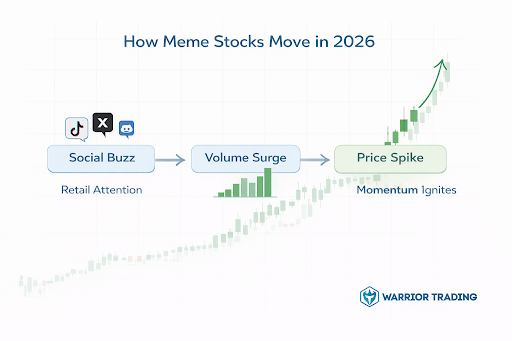
When someone says “meme stock,” most people think of something that goes viral on Reddit. That still happens, but the definition is a bit more nuanced today.
For me, a meme stock 2026 has a few core traits:
-
Social-media driven buzz: Chatter on TikTok, X, Discord, or even niche trading forums.
-
Explosive volatility: Rapid moves that can happen in minutes.
-
A disconnect from fundamentals: Price momentum matters more than revenue or earnings.
Just because a stock appears in a trending TikTok doesn’t make it a meme; it needs the other ingredients of real volume, big relative volatility, and the kind of momentum that draws in retail traders. The setup is the same: social hype translates into trading volume, which translates into fast price movement.
Examples of Meme Stocks in 2026
So what does a meme stock look like in 2026? Here are a few tickers that captured the market’s attention this year and how they’ve behaved.
Note: references to price and performance are based on the date of writing this article. Please see https://www.warriortrading.com/quote/ to get up to date information on performance of these or other stocks.
-
$GME: The original meme stock is back in the spotlight, up 23% year-to-date as of March 2026. GameStop caught fire again thanks to a convergence of short-squeeze speculation and buzz around CEO Ryan Cohen potentially eyeing a major acquisition — with eBay floated as a possible target. Unlike classic meme rallies, this one has a strategic narrative behind it, including a compensation plan for Cohen worth up to $35 billion if certain milestones are hit, giving bulls more to work with than pure hype.
-
$OPEN: Opendoor Technologies is down 17% year-to-date, a reminder that the meme stock tide can go out just as fast as it comes in. The proptech company has struggled to hold retail interest without a strong catalyst, and it’s been swept up in the broader sell-off hitting speculative names in 2026.
-
$SOUN: SoundHound AI is off 21% year-to-date despite being an AI-adjacent name — a space that still draws retail attention. The stock is a cautionary tale about how even buzzworthy sectors can’t sustain meme momentum without consistent fundamental backing.
-
$AMC: The theater chain is the worst performer of the group, down 29% year-to-date. Once a symbol of the retail trading revolution, AMC has struggled to recapture that magic as the novelty of the original meme era fades and its underlying business continues to face headwinds.
How I Trade Meme Stocks Now
Trading meme stocks in 2026 is different from trading them five years ago. Back then, people were just discovering how powerful coordinated retail moves could be. Today, I approach them like any other high‑momentum day trade: with discipline, structure, and a plan.
Here’s my quick checklist for meme setups:
-
Float under 20 million shares – low float means rapid spikes.
-
Gap of at least 25% on volume – I want a clear reason the stock is moving.
-
Surge in social chatter – not just one post, but broad attention across platforms.
-
Pre‑market high breakout – this gives me a measurable entry zone.
I don’t trade every meme I see. I trade the ones with real volume and a pattern I can act on. The hype gets people in the room, but volume and structure tell me whether it’s worth the risk.
I use tight entries, clear stop levels, and fast exits. Meme stocks can melt up in minutes and then bleed out just as fast. If I’m not ready to exit quickly, I won’t take the trade. I’m not here to hold and hope, and I trade the move and protect my capital.
What’s Different Since the 2021 Meme Craze?
A lot has changed since the first big meme wave:
-
Shorter pumps: Meme moves now tend to peak faster and fade quicker.
-
Smarter retail traders: People learned from the pain of averaged‑down positions.
-
Institutional algo involvement: Algorithms now hunt for meme patterns too.
-
More regulatory scrutiny: Congress, federal, and state agencies are continually evaluating how new ‘ trends’ should be viewed in the scope of regulations.
-
New platforms driving trends: TikTok and Discord replaced some of Reddit’s dominance.
The rules of the game are the same in spirit but faster in execution. Information spreads instantly, and traders act on sentiment within seconds. That means the window to capitalize is smaller, but so are the inevitable reversals.
Emotion still fuels these moves, but the players are more sophisticated now. That’s both an opportunity and a hazard.
Common Mistakes To Avoid
Trading meme stocks without a plan is like jumping into a sprint without stretching — eventually, you pay for it.
Here are the biggest traps I see:
-
FOMO entries after halts: Buying on a halt break can lead to instant regret.
-
Holding through reversals: These stocks don’t care about your price basis.
-
Averaging down weak setups: That’s how you turn small losses into big ones.
-
Ignoring float and dilution: A large float means less explosive moves.
-
Blindly trusting influencers: A viral post doesn’t equal a signal you should trade it.
FAQs
Are meme stocks still profitable in 2026?
Yes, but only if you treat them like structured day trades, not long‑term holds.
What’s the biggest risk in meme stock trading?
Getting caught chasing after halts or trading without defined exit points.
Are meme stocks regulated more now?
The SEC watches sentiment and unusual trading activity more closely, but retail still moves tickers fast.
Conclusion: Trade the Hype, But Trade Smart
Meme stocks in 2026 are real, but they behave differently than in the early 2020s. They still move fast, they still draw in traders, and they still can hand you a quick win if you read the setup right.
The key is discipline: trade the pattern, respect your stops, and never trade hype alone. Volatility is an opportunity, but only when you control your risk. I’ll trade anything that moves, meme stock or not — if I’ve got the edge. That’s how we stay alive in fast markets, and that’s how we grow.